Director, Technical Adviser to the Directorate General
at Cameroon’s National Public Debt Management Office, CAMEROON
Could you please introduce yourself and tell us about your background, and what public service means to you?
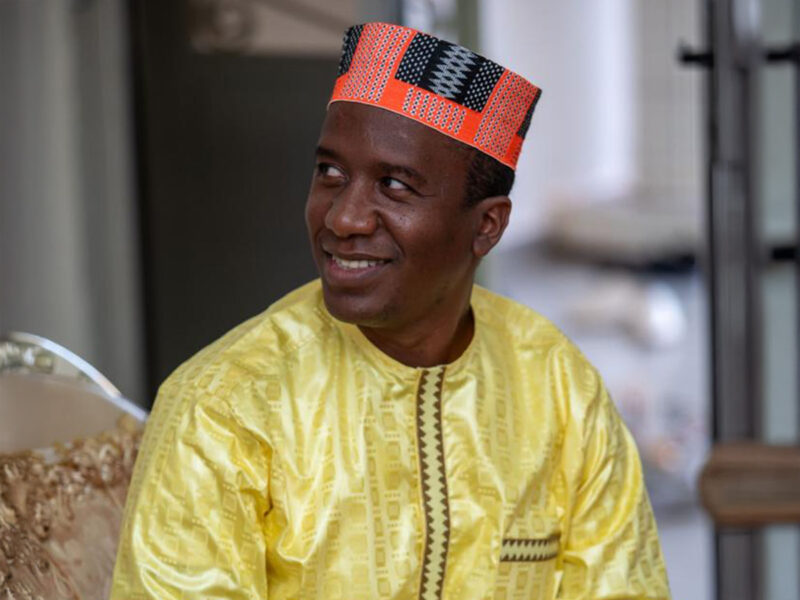
My name is ENOH TONYE Marc Olivier. I am a Cameroonian public servant working in the field of sovereign finance and development policy. I hold bachelor’s degrees in Economics and Political Science from the University of Michigan, as well as a Master’s degree in Economics from Université Clermont Auvergne.
Since 2013, I have been serving at the Caisse Autonome d’Amortissement, the public institution under the Ministry of Finance responsible for managing Cameroon’s sovereign debt portfolio and supporting the financing of major development projects. I currently serve as Senior Adviser to the Directorate General of the institution, with a particular focus on financing mobilization, risk management, project management, capital markets development, and institutional strengthening.
Public service has always had a profound meaning for me, perhaps because I come from a family where several generations served the State. Over time, however, my understanding of public service evolved beyond tradition. Today, I see it primarily as an efficient lever to contribute meaningfully to society and to improve people’s lives in a tangible way.
One of the privileges of my work is that its impact is often visible. When you participate in structuring financing for roads, energy infrastructure, water access, hospitals, or schools, you eventually witness the direct transformation in communities: improved mobility, expanded economic opportunities, better living conditions, and renewed optimism among citizens. Those moments give real meaning to the work.
For me, public service is therefore not simply an administrative function. It is the responsibility to place one’s knowledge, discipline, creativity, and energy at the service of the greater good, with integrity and with a constant focus on concrete developmental outcomes.
What first drew you to public service, and what motivates you to continue your commitment today?
Initially, I would say my family environment played an important role. I grew up surrounded by people in public service, so the idea of serving the State felt natural from an early age.
What motivates me today, however, is something much deeper: seeing firsthand how public action can positively transform lives. Over the years, I have worked on financing structures for development projects in sectors such as infrastructure, energy, water, transport, health, and education. When these projects materialize and citizens directly benefit from them, it reinforces the meaning of the work we do.
That is what continues to drive me every day. I am motivated by impact, by execution, and by the idea that well-designed public policies and financing mechanisms can create lasting opportunities for communities.
I also appreciate the intellectual dimension of my work. My current responsibilities sit at the intersection of economics, finance, innovation, and public policy. They require analytical rigor, forecasting, financial structuring, market analysis, and interaction with international financial institutions and investors. This combination of technical sophistication and developmental purpose makes public service particularly meaningful to me.
At the same time, I strongly believe that modern public service must remain open to innovation, cooperation, and new ideas. Creativity and openness are increasingly essential in solving complex public challenges while respecting institutions, legal frameworks, and established procedures.
As an emerging public leader, what does leadership in public service mean to you, and how does it shape the way you serve?
I prefer to approach leadership in public service with humility. Rather than viewing myself as a “leader” in the traditional sense, I see myself as someone entrusted with responsibilities that require stewardship, discipline, and accountability.
Public leadership, to me, is fundamentally about service and responsibility. Public mandates are temporary, and during that limited time, one has the duty to contribute with seriousness, professionalism, and integrity.
Public institutions everywhere operate within environments that can be complex: competing priorities, bureaucratic constraints, political sensitivities, and resource limitations. Effective public leadership therefore requires patience, cooperation, sound judgment, and the ability to navigate complexity without losing sight of the public interest.
In my own work, I try to remain focused on outcomes and execution. I believe that ideas only become valuable when they are effectively implemented and carried through to completion. I also believe strongly in institutional respect — respect for hierarchy, for laws and regulations, and for the collective mission of the institution one serves.
Another important aspect for me is institutional strengthening. In public service, there can sometimes be too much emphasis on individual achievement and not enough attention given to building stronger institutions. Sustainable impact comes when institutions themselves become more effective, more credible, and more resilient over time.
Which values or standards are non-negotiable for you when serving the public?
Two principles are particularly important to me: integrity and execution.
In my current role as senior adviser to my Director General, I have both a professional and ethical responsibility to provide the most rigorous, objective, and truthful analysis possible on the files entrusted to me, regardless of the sensitivities surrounding them. I believe decision-makers need clear and honest assessments, including the implications, risks, and trade-offs associated with different options.
In public service, everyone has a role to play. Some provide technical analysis and strategic insight, others arbitrate between options, and others ultimately make decisions. My responsibility is therefore to contribute with seriousness, intellectual honesty, and sound judgment, so that leadership can make the most informed decisions possible in the public interest.
I also place a very strong emphasis on execution. When a responsibility is entrusted to me, I believe it should be pursued with discipline and carried through to completion, without cutting corners and without losing sight of the intended impact. Public service often operates under constraints, competing priorities, and urgency, but I have learned that delayed action can sometimes reduce the value and effectiveness of otherwise good ideas.
At the same time, execution should never come at the expense of institutional discipline. I strongly value teamwork, cooperation, respect for hierarchy, adherence to laws and norms, and loyalty to the institutions we serve. Public trust is built not only through results, but also through the integrity of the process used to achieve them.
Finally, I try to remain open-minded and innovative in my approach to work. Public institutions today operate in an increasingly complex and rapidly changing environment, which is why creativity, openness, and innovation are becoming essential qualities for effective public service.
Can you share one specific change, reform or initiative that you have helped to shape in public service, and why does it matter to you?
Public service is fundamentally collective work, so I generally try to avoid personalizing reforms or initiatives. Most meaningful public outcomes are the result of coordinated efforts involving institutions, technical teams, and leadership at multiple levels.
What I can say is that I have had the opportunity to contribute to several strategic financing and development initiatives whose implementation produced tangible economic and social impact. For me, what matters most is not individual recognition, but whether the work ultimately improves the lives of citizens and strengthens public institutions.
I remain deeply appreciative of the trust placed in me by my institution and by senior leadership over the years. That trust has allowed me to contribute to complex assignments requiring technical rigor, coordination, and long-term thinking.
Ultimately, I believe public service should remain focused on outcomes rather than personalities. Sustainable progress is always the result of institutions working effectively together.
When you think about delivery and impact, what does meaningful public service success look like for the citizens you serve?
Meaningful public service success is ultimately measured by improvements in people’s daily lives.
For citizens, success means better infrastructure, improved access to education and healthcare, more economic opportunities, greater security, stronger institutions, and a sense that public action is genuinely responsive to their aspirations.
In my own field, one of the rewarding aspects is that the developmental impact is often visible over time. A financing structure or economic reform may initially appear highly technical, but behind it are roads connecting communities, electricity reaching households, hospitals serving patients, businesses growing, or farmers accessing markets more efficiently.
I believe there can be no sustainable development without strong economic foundations. Public service therefore has a responsibility not only to manage resources responsibly, but also to create the conditions for long-term growth, productivity, and shared prosperity.
For me, meaningful success is when citizens can genuinely feel that public institutions are improving their opportunities, preserving their dignity, and helping them build a better future with confidence.