LEAD places DPI at the heart of Africa’s governance debate
Just months after its launch with more than 40 senior public officials from across the continent, the Africa CEO Forum’s governance initiative, LEAD, has set a clear strategic direction. Over the next three years, the programme will focus on data-powered public policies, with digital public infrastructure (DPI) at the core.
For a continent where 40% of the population still lacks official identification and cross-border payments can take days, the implications are concrete. Without digital ID, a Kenyan farmer can’t access subsidies because she has no proof of land ownership. Without interoperable payments, remittances from Abidjan to Dakar take three days and cost 8%. Without health records, a pregnant woman in rural Tanzania repeats the same tests at every clinic because data doesn’t follow her.
Identity systems, payment rails, and data governance frameworks increasingly determine who can access public services, participate in the formal economy, or benefit from social protection. LEAD’s founding partners argue that decisions on such integral systems—often difficult to reverse—require policymakers who understand both their technical and institutional consequences.
A network takes shape
LEAD was formally launched last August at Mohammed VI Polytechnic University in Rabat. More than 40 senior public servants—special advisers to presidents, chiefs of staff in key ministries, ministerial advisers, and executives of state-owned enterprises—gathered from over 20 African countries. The aim was not ceremonial exchange, but peer-level discussion around reform design and implementation.
Women represented 45% of the cohort. Participants quickly moved beyond the formal sessions, setting to exchanging procurement templates, regulatory approaches, and implementation lessons. The most significant outcome sought by the Africa CEO Forum is peer exchange among reform-minded, young public officials who face similar political and administrative constraints.
“It provided a platform for peers from across the continent to connect and share perspectives,” said Astewaye Woldemichael, Adviser at Ethiopia’s Ministry of Finance. “Beyond skills and mentorship, it also became a support system.”
Saul Musker, from the Private Office of South Africa’s President, pointed to the value of comparative learning: “Our institutional contexts differ widely, but there is a shared commitment to advancing public outcomes in Africa.”
LEAD was launched by the Africa CEO Forum in partnership with UM6P, the Aig-Imoukhuede Foundation, BADEA, and Afreximbank, with the stated objective of strengthening senior public leadership capacity across the continent.
Why digital public infrastructure has become a policy priority
LEAD’s emphasis on DPI reflects a broader shift in global policy debates. DPI is enabling infrastructure, comparable in strategic importance to roads, ports, or power grids.
India’s Aadhaar biometric ID enrolled 1.3 billion people 99% of all Indian adults enabling financial inclusion to jump from 25% in 2008 to over 80% by 2023. Brazil’s instant payment system, Pix, reached 80% adoption. Rwanda’s Irembo portal saved citizens over 100 million hours by eliminating queues at government offices.
“Get the foundations right—identity, payments, secure data exchange and you unlock multiple sectors at once,” said Amir Ben Yahmed, CEO of Jeune Afrique Media Group.

First LEAD Cohort, exchanging on DPI with Aigboje Aig-Imoukhuede
Yet the policy choices involved are rarely straightforward. Governments are often offered turnkey digital systems by global technology firms, promising speed and technical reliability. While such solutions can address immediate capacity constraints, they may also raise longer-term issues around vendor lock-in, data sovereignty, and limited flexibility.
Instead the LEAD cohort explored alternative approaches focused on common infrastructure: national digital IDs usable across services, open-source or proprietary interoperable payment systems, and common data-exchange standards. These models require coordination across ministries and with the private sector, as well as strong governance frameworks. They are designed to preserve public ownership while maintaining adaptability over time to ensure citizen service comes first. The central question is not whether digital systems are adopted, but who controls them—and under what conditions.
A roadmap through 2028
LEAD’s current roadmap runs through 2028. The programme plans to train one cohort of approximately 50 Fellows each year, for a projected total of more than 200 participants. The curriculum draws on African case studies, including Ethiopia’s digital ID programme, payment system reforms in Tanzania, health information systems in Kenya, and emerging initiatives in West Africa.
The focus is not technical training. Instead, the programme addresses political economy challenges: coordinating across institutions, designing governance frameworks, managing public-private partnerships, and maintaining policy autonomy as digital systems scale.
“We have spent years developing strategies,” said Woldemichael. “The challenge now is implementation and accountability.”
UM6P President Hicham El Habti framed the issue in institutional terms: “What is often missing are the conditions that allow public institutions to turn vision into delivery.”
From retreats to policy influence
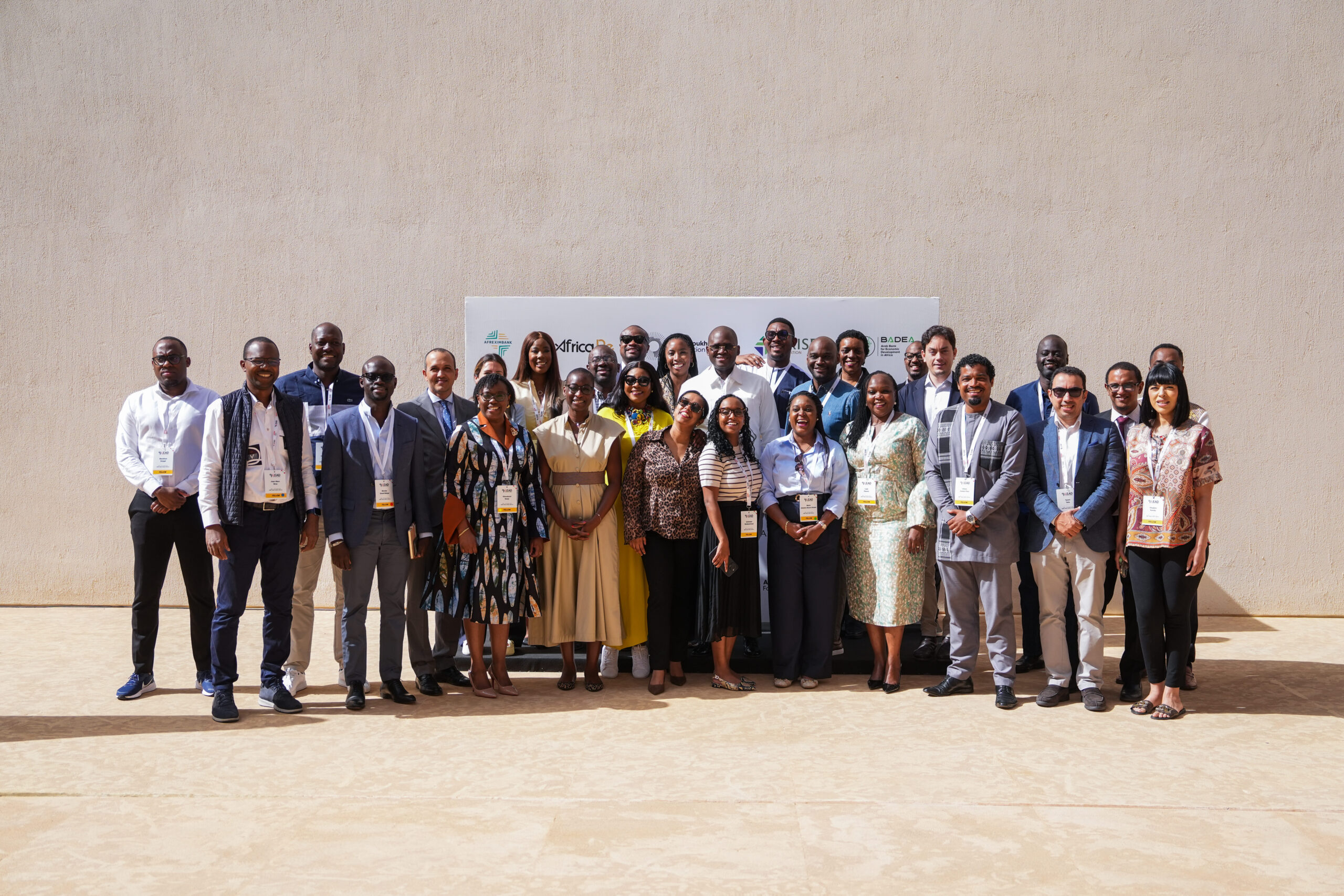
LEAD first cohort retreat with 40 senior public officials from across the continent.
Beyond annual gatherings, LEAD Fellows are expected to remain engaged throughout the year through expert dialogues and collaborative work. Planned sessions include exchanges with former senior officials from across the Global South focusing on reform sequencing and policy trade-offs.
Fellows also collaborate on policy papers aimed at translating technical concepts into actionable frameworks for implementation. These are intended to feed into discussions at the Africa CEO Forum’s annual meeting, where government officials and business leaders convene.
LEAD operates through nominations rather than open applications, with selection based on seniority and demonstrated capacity to influence policy. Identification of future cohorts is ongoing.
What is at stake
By 2028, LEAD aims to have contributed to the design or revision of more than 20 national DPI strategies, with policies influenced by its alumni potentially affecting hundreds of millions of citizens.
More broadly, the initiative reflects a growing recognition that the digital backbone of a country is not merely a technical decision but a governance choice with long-term implications. As Africa’s population grows and regional integration deepens, the ability of public institutions to design and govern digital infrastructure will increasingly shape economic and social outcomes.
Whether LEAD’s approach translates into lasting policy change will depend on political will, administrative capacity, and national context. What is already clear is that the debate over who designs and controls Africa’s digital foundations is no longer theoretical and any such fundamental decisions made now might be difficult to reverse.
Learn more about LEAD | For partnership inquiries: lead@theafricaceoforum.com