

-
(GMT+2)Opening Ceremony
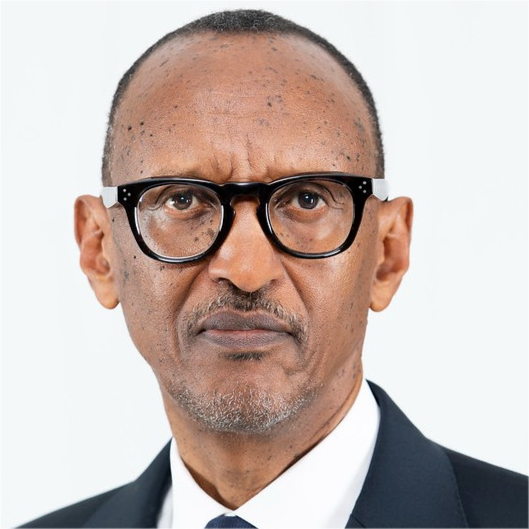
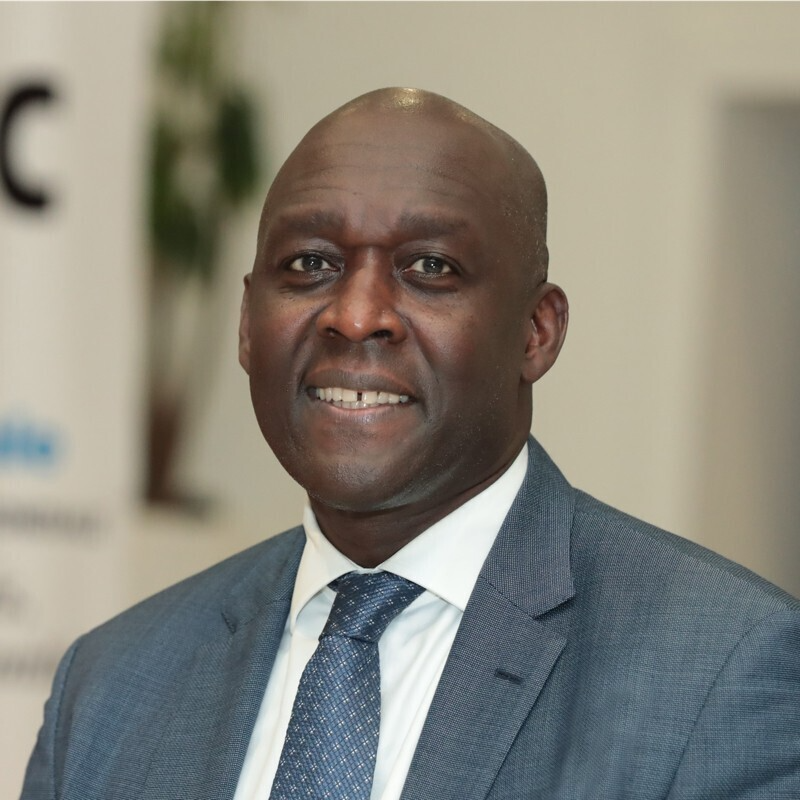

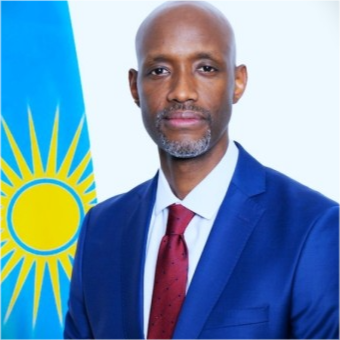
-
(GMT+2)Opening Address
Africa at scale: capital, policy, and the architecture of growth
-
(GMT+2)Opening Panel
Scale or Fail: why Africa must embrace shared ownershipThe fraying of multilateralism, the reordering of trade, and the retreat of aid flows are redrawing the map of global capital. In this new order, size is no longer a strategic advantage – it is the first line of defence. Africa enters this moment with real momentum. But momentum is not scale. And scale will only be achieved on Africa’s own terms through one organising logic: shared ownership – African nations and businesses investing not only in themselves, but in each other’s growth, assets, and markets. The Africa CEO Forum’s opening panel brings together leaders operating at the intersection of capital, industry and the continent’s ambitions to ask a defining question: What will it take for Africa’s leaders to turn shared ownership from ambition into practice – and what stands in its way?
Key points- Shared equity: Can African capital markets and institutional investors become the backbone of continental expansion?
- Shared infrastructure: What will it take to move from isolated megaprojects to integrated cross-border corridors – connecting resources, markets and people at continental scale?
- Shared frameworks: How can legal and technological frameworks become drivers of scale — turning regulatory coherence into a continental competitive advantage?


-
(GMT+2)Invest in Côte d'Ivoire
Conversation with H.E. Robert BEUGRE MAMBEMajor economies are now openly mobilising state power to back their national champions. Africa has considerable assets, but assets alone do not create leverage: leverage requires scale. H. E. Robert Beugré Mambé, Prime Minister of Côte d’Ivoire, reflects on the choices needed to cross that threshold.


-
(GMT+2)Invest in Côte d'Ivoire
As the foremost annual meeting of the private sector on the continent, the Africa CEO Forum is the leading platform for public-private dialogue. ‘Invest In’ sessions allow CEOs and investors to meet with high-level African government officials to gain deeper insight into their countries’ economic development strategies. These sessions provide exposure to a variety of key sectors, business environments, and public and private investment opportunities.

 Speaker
H.E. Souleymane DIARRASSOUBA
Minister of Planning and Development, Republic of Côte d'Ivoire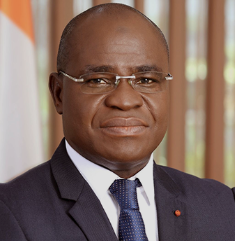 Speaker
H.E. Ibrahim Kalil KONATE
Minister of Trade, Industry and Handicrafts, Republic of Côte d'Ivoire Speaker
H.E. Djibril OUATTARA
Minister of Digital Transition and Technological Innovation, Republic of Côte d'Ivoire

-
(GMT+2)Panel
WFC - Closed circuit: Why African entrepreneurs self-select out of growth capitalAcross Sub-Saharan Africa, the gender wealth gap begins before investment decisions are made. Female entrepreneurs are almost twice as likely as men not to apply for bank loans – despite similar approval rates. This self-selection compounds across the financing chain, concentrating African Businesswomen in sectors that attract 16% less investment and limiting PE/VC funding to a median of $500k versus $9.7m for men. The result is a reinforcing loop that systematically limits the emergence of scalable women-led firms – and costs the region an estimated $95bn in lost productivity annually. As much as an inclusion issue, gender finance is a capital allocation failure.
Key points
- Capital call: Which structural interventions – from loan-officer outreach to bias-suppressing credit scoring – could most effectively break the self-selection dynamic at source?
- Unfit for purpose: How can investment committees shift from sector familiarity to performance metrics – and which procurement programmes can actively pull women-led firms into capital-intensive industries?
- Legibility gap: What would it take to build the track record infrastructure – standardised data, alternative credit signals, portfolio benchmarks – that makes women-led firms legible to institutional investors?


 Speaker
Aminata KANE
Senior Vice President & Group Country Manager for Western and central Africa (WCA), Visa -
(GMT+2)Invest in Rwanda
As the foremost annual meeting of the private sector on the continent, the Africa CEO Forum is the leading platform for public-private dialogue. ‘Invest In’ sessions allow CEOs and investors to meet with high-level African government officials to gain deeper insight into their countries’ economic development strategies. These sessions provide exposure to a variety of key sectors, business environments, and public and private investment opportunities.


-
(GMT+2)Panel
From Cargo to Kilowatt: Can Africa’s Gas Boom Power Africa?Africa’s upstream gas sector is accelerating. Senegal’s GTA reached export in 2025, Congo shipped its first LNG cargo in 2026, and new LNG capacity across Nigeria and Mozambique is coming online imminently. But as geopolitical tensions and gas prices rise, African gas seems destined almost exclusively for international markets, with exports slated to double by 2030. Domestic gas-to-power frameworks and projects continue to lag, and despite initiatives like Mission 300 to build up domestic demand, export markets remain the safer bet. How can African actors align contracts, logistics, incentives and financing structures quickly enough to capitalise on – and tap into – their own power source?
Key points
- Export vs domestic priority: Which supply chain models and contractual agreements can make regional consumption commercially viable for both producers, off takers and final consumers?
- The bankability gap: Mission 300 is advancing grid reform and transmission investment, yet final consumer creditworthiness remains an obstacle. Which risk-sharing instruments or data-advocacy initiatives could mobilize further investment?
- Bridging the gap: Can export projects be redirected to supply local demand, and which risk mitigation tools are necessary to make this a reality?



-
(GMT+2)Executive Dialogue
Open for business—or open season? Africa, Asian overcapacity and the reconfiguration of global tradeAccess via sign-up on the event app or by invitation only.
Global trade flows are being reshaped by industrial overcapacity in Asia, redirected trade routes, and renewed state intervention across major economies. In 2025, renewed trade tensions have accelerated this reconfiguration, with surplus manufacturing capacity redirected toward open markets – with Africa the prime target. While the continent remains committed to open markets and imports can support consumer welfare, they also can widen trade imbalances and end-market dependence. This Executive Dialogue will examine how African economies can remain open for business while managing emerging imbalances, safeguarding industrial ambitions, and strengthening their position in a more fragmented global trading system.
Key points
- Morocco’s automotive rise and Kenya’s pharma growth show that industrial bets can work. How can African public and private leaders jointly pick winning industries?
- Producer & consumer: How can African economies reconcile open trade ties with strategic industrial and competitiveness objectives?
- Processing platform – Can trade infrastructure help Africa become the mid-stage manufacturing bridge between Asia’s production base and Western markets?

 Speaker
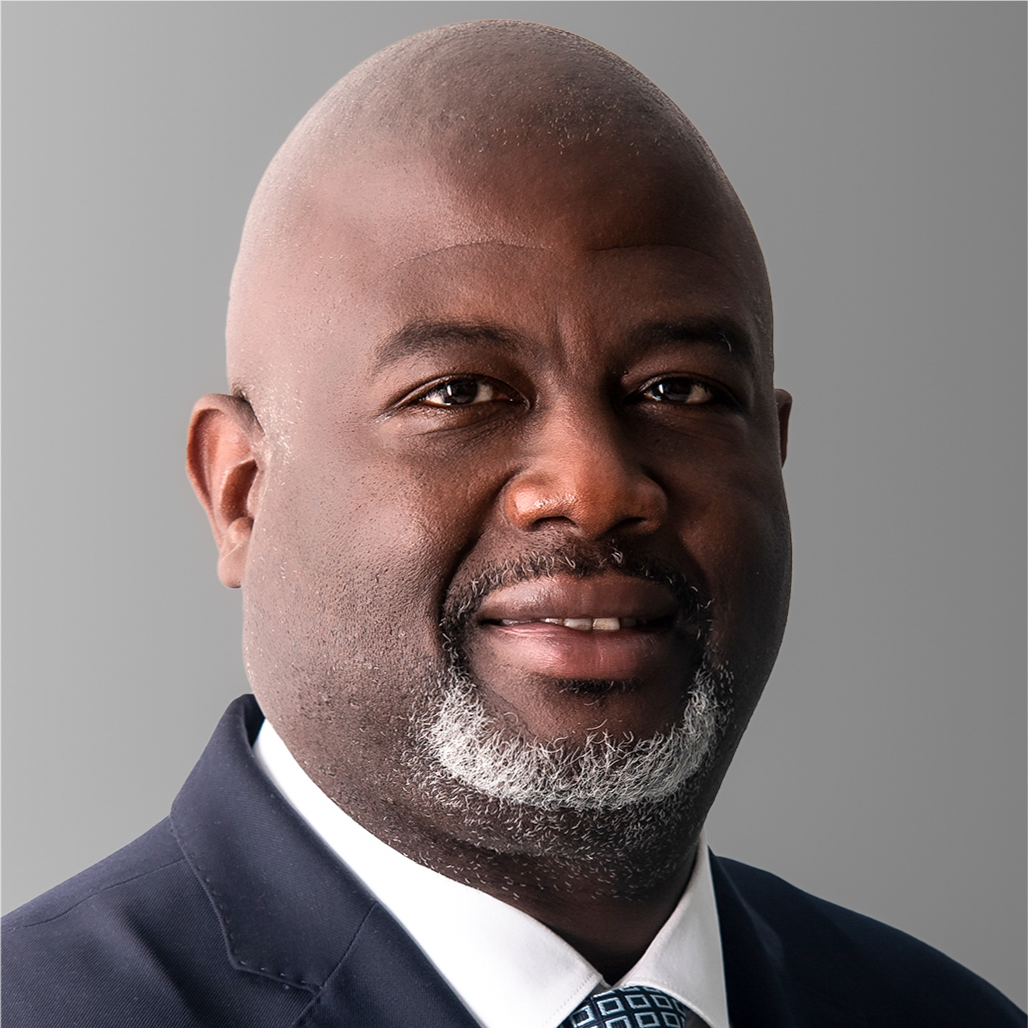
Nicolas SARTINI
Senior Vice President, Business Development, MSC Mediterranean Shipping Company

-
(GMT+2)Invest in Morocco
As the foremost annual meeting of the private sector on the continent, the Africa CEO Forum is the leading platform for public-private dialogue. ‘Invest In’ sessions allow CEOs and investors to meet with high-level African government officials to gain deeper insight into their countries’ economic development strategies. These sessions provide exposure to a variety of key sectors, business environments, and public and private investment opportunities.

 Speaker
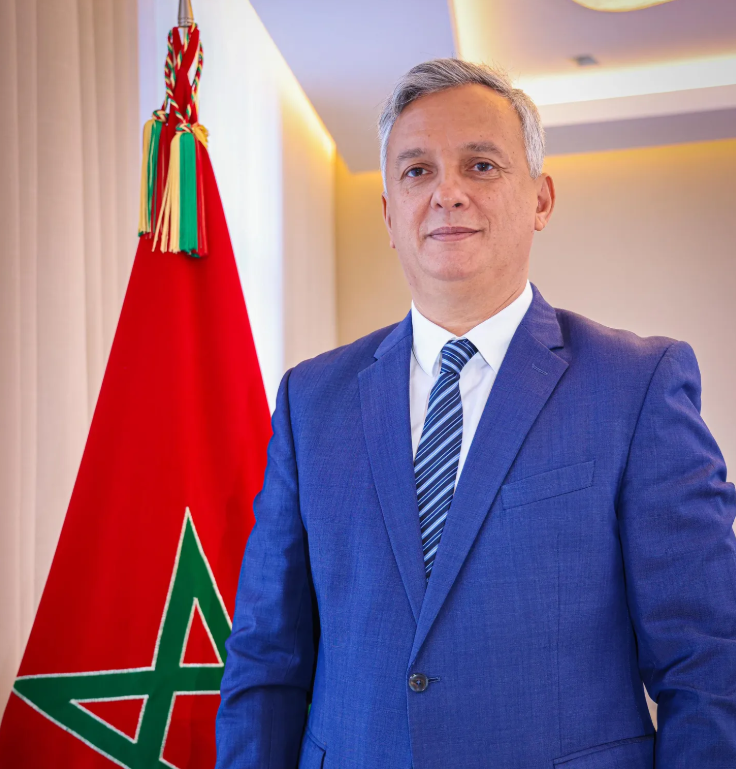
H.E. Karim ZIDANE
Minister Delegate to the Head of Government, responsible for Investment, Convergence, and the Evaluation of Public Policies, Kingdom of Morocco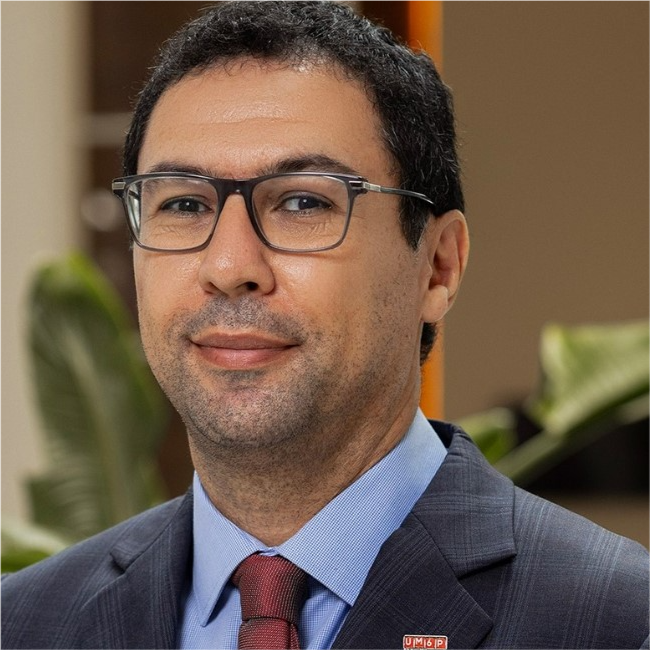 Speaker
Khalid BADDOU
Chief Institutional Affairs Officer, University Mohammed VI Polytechnic (UM6P)


 Speaker
Youssef TBER
Director of Investments and Exports, Moroccan Agency for Investment and Export Development (AMDIE) -
(GMT+2)Conversation With
At the right scale: Matching systems to African entrepreneurs' ambitionAcross Africa, entrepreneurs are building businesses that respond directly to climate and employment challenges. But scaling from thousands to millions of customers is rarely straightforward. It requires navigating gaps in financing, complex regulation, and fragmented markets – and closing those gaps demands more than grant capital alone. Africa’s domestic capital is growing; the question is whether it can be mobilised more catalytically in support of African priorities. In this conversation, Sewit Ahderom, President and CEO of the Mastercard Foundation, discusses what it takes to build businesses at scale in Africa, and how finance, philanthropy, and markets must evolve to support that ambition, particularly in sectors that create jobs and expand opportunity for young people.


-
(GMT+2)Panel
Don’t be patient: Is African healthcare access on the cusp of a revolution?In Mozambique and Nigeria, last-mile logistics can represent up to 80% of total vaccine and malaria supply costs. Across Africa, with few exceptions, logistics are a key driver of inaccessibility to medical assistance, diagnostics and essential health products. From cold-chain innovation to drone deliveries, and from tele-health to remote community healthcare upskilling, the potential for improvement from a low base is vast. With a $150M investment in Zipline by the DFC, the benefits will be felt by patients and business alike. As the continent’s demographics evolve, shifting needs from acute to chronic diseases, how can Africa’s healthcare players deliver both necessary care and returns?
Key points
- Sharing the cost in the post-aid era: how can drugs manufacturers, logisticians, philanthropic and government actors collaborate to lower the cost of accessible care?
- Inventions and innovation: what are today’s technological game-changers improving healthcare access?
- From DHIS2 to OpenMRS: how can data fragmentation be overcome to make healthcare delivery a bankable business?

-transformed.jpeg)


-
(GMT+2)Cocktail Disrupters Club & 20 Future Champions of Tech
Beyond funding: Building the infrastructure African startups actually needAfrican startups raised over $3.4B in 2025, confirming the continent’s resilient innovation landscape. But beyond funding, startups face a deeper challenge: the lack of the underlying systems needed to grow. From limited local angel networks and fragmented access to operational know-how, to weak product design standards and the absence of strong founder communities, too many entrepreneurs are still building in isolation. At the earliest stages, where risk is highest and private capital rarely ventures, the public sector also has a critical role to play through dedicated seed funds, support programs and policy frameworks that create the conditions for the broader ecosystem to follow. As a result, Africa’s startup landscape remains rich in ideas, but uneven in execution and sustainability.
In this exclusive cocktail hosted by VISA, Jeune Afrique and The Africa Report, startup founders, investors, ecosystem builders and public stakeholders will come together to explore how to strengthen the capital, knowledge, design and community infrastructure, across both public and private spheres, needed to turn African innovation into lasting companies.

 Speaker
Ismahill DIABY
Vice President, General Manager Western and Central Francophone & Lusophone Africa, Visa

-
(GMT+2)Panel
Blue corridors: Unlocking Africa's hidden logistics advantageAfrica moves 80% of its freight by road – its most expensive transport mode. Inland waterways could cut logistics costs by 30–60%, while supporting hydropower, irrigation and climate resilience. Globally, rivers are coordinated economic corridors, like the Yangtze, which generates over 40% of China’s GDP. In Africa, however, water infrastructure remains fragmented. Energy, agriculture and transport are planned in silos, inflating costs and weakening competitiveness. Projects like the AfDB’s Lake Victoria–Mediterranean corridor show a shift is possible. Multi-purpose water corridors could become Africa’s next productivity backbone – if the right governance models, anchor investors, and deal structures can align energy, agriculture and trade within investable platforms.
Key points
- What are the key obstacles to the development of fluvial ports? Why don’t more major industrial players – moving millions of tonnes – make the shift from road to river?
- From powerless administration to transnational enablers: How can project promoters, governments and DFIs help establish and empower new corridor-level institutions?
- Financing streams: Multi-purpose hubs are even more complex to finance than individual African power and seaport projects. How can this game-changing infrastructure be de-risked?

 Speaker
Oluwadamilola EMMANUEL
Special Adviser to the Governor of Lagos State on Blue Economy and General Manager, Lagos Waterways Authority (LASWA)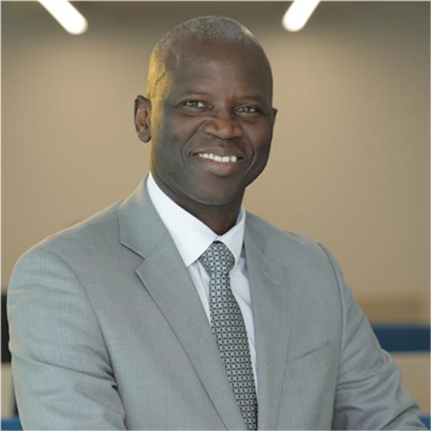

-
(GMT+2)Conversation With
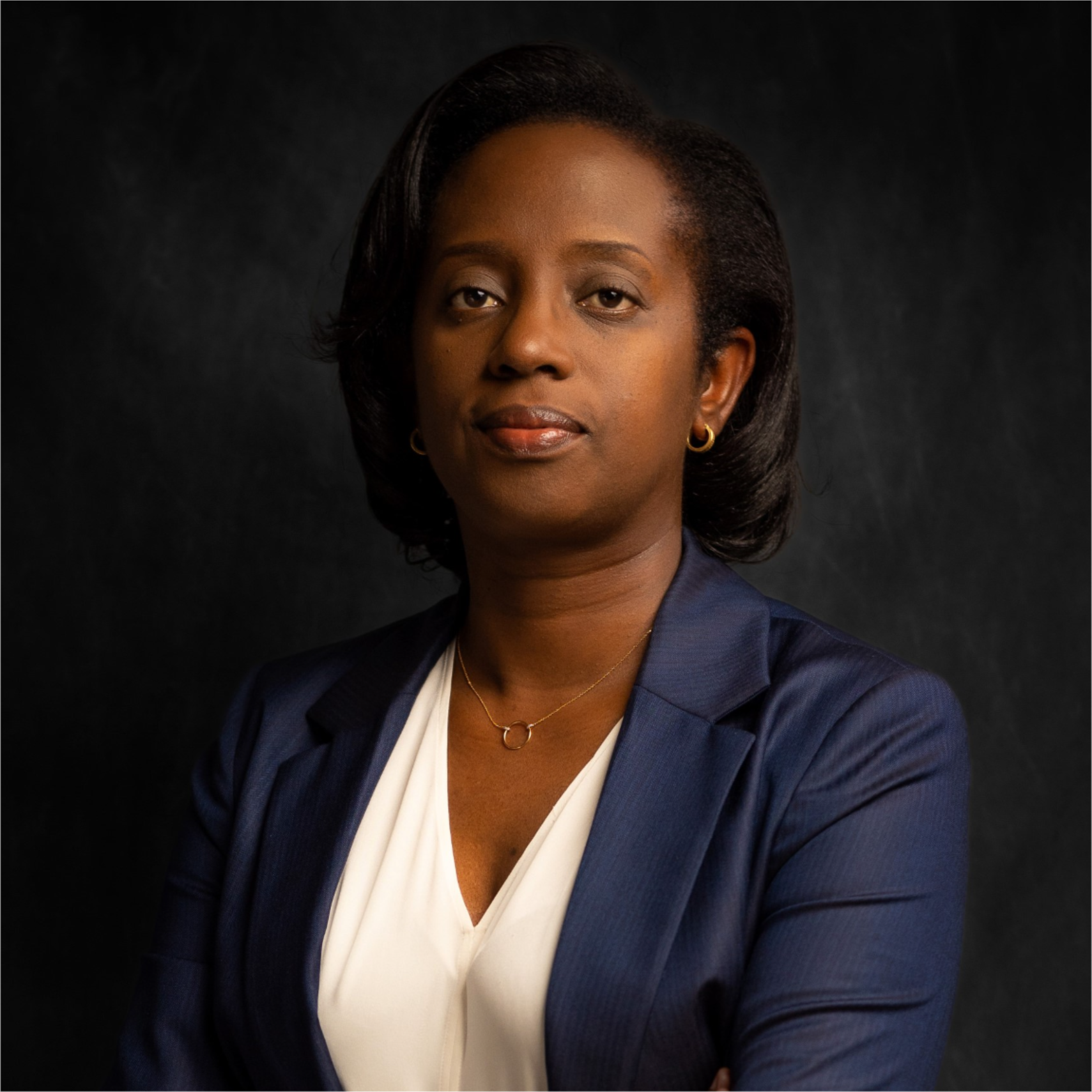
Underwriting the LeapAcross Africa, insurance penetration remains below 3% of GDP in most markets – not because the risks are uninsurable, but because the ecosystem to price and absorb them has never been deliberately built. Without that infrastructure, investment stalls, fiscal buffers stay thin, and growth ambitions outpace the financial systems meant to support them. Rwanda is testing a different approach: a National Insurance Strategy that treats insurance and reinsurance not just as financial services, but as instruments of structural transformation. Soraya Hakuziyaremye, Governor of the National Bank of Rwanda, and Corneille Karekezi, Group Managing Director and CEO of Africa Re, make the case for insurance as strategic infrastructure – and what it takes to build it by design.


 Speaker
Corneille KAREKEZI
Group Managing Director of Africa Re & Chairperson of AAMFI Governing Council. -
(GMT+2)Strategic Roundtable
The right content: Aligning African project requirements with industrial realityAccess via sign-up on the event app or by invitation only.
Across Africa, a wave of new mining and energy codes is locking in local content rules for a generation, often through rigid quotas that raise costs and slow procurement. Evidence from South Africa’s energy sector suggests mandates can add up to 10% to project costs, while competitors like Chile and Brazil use phased, incentive-based approaches that attract capital while building capability. The risk: weaker competitiveness in a globally mobile industry. Smarter models exist — from Anglo American’s Zimele to TotalEnergies’ Kaminho in Angola — linking localisation to real capacity and bankability. The goal: turn local content from a compliance obligation into competitive advantage.
Key points
- From quotas to returns: How can localisation frameworks be negotiated so that cost increases today are matched by topline gains for all parties tomorrow?
- Which local content obligations are most onerous and create the least local value – and which have the best RoI for citizens?
- Localisation Innovation: Amid a global revaluation of extractives, can we rethink traditional local content altogether, recognising value creation for the future?


-
(GMT+2)Strategic Roundtable
Financing Africa’s nuclear future: From first projects to scalable investmentAccess via sign-up on the event app or by invitation only.
As African economies face rising power demand, industrialisation ambitions, and increasing pressure to decarbonise, nuclear energy – particularly Small Modular Reactors (SMRs) – is emerging as a credible baseload solution. Several countries are advancing feasibility studies and regulatory frameworks, yet progress remains constrained by one critical challenge: financing. Nuclear projects are capital-intensive, long-term, and perceived as high-risk, making them difficult to structure within current infrastructure financing models. Building on the inaugural nuclear financing roundtable, this second edition moves from the case for nuclear to the mechanics of funding it – examining how blended financing structures can align public priorities with private capital expectations.
Key points
- What financing models – sovereign, PPP, or hybrid – can make African nuclear projects bankable and fiscally sustainable, and how should nuclear fit within the climate finance framework?
- How can DFIs and export credit agencies collaborate, and how could a framework such as NAFAD support a pipeline of repeatable nuclear financing structures?
- What minimum conditions – demand, grid readiness, institutional capacity – must be met to make nuclear projects investment-ready?


 Speaker
Lassina ZERBO
Chair & Energy Advisor and Member of the Strategy and Policy Council, Rwanda Atomic Energy Board (RAEB) & Office of the President


-
(GMT+2)Strategic Roundtable
The skills corridor: Enabling African firms to deploy talent across bordersAccess via sign-up on the event app or by invitation only.
Africa’s economic integration remains constrained by limited labour mobility. Work permits are slow, rules and decisions can be unpredictable. Yet businesses are ready for a mobile talent pool: an SAP survey in Kenya, Nigeria, and South Africa found that geographical location is one of the least important recruitment factors – cited by only 19% of firms. Across energy, construction, healthcare, and logistics, 30–50% of firms cite skills shortages as a major constraint, according to the African Development Bank. This roundtable will reconcile these facts, asking whether a simple, trusted digital infrastructure system is feasible to catalyse the intra-African talent trade.
Key points
- What practical steps would make cross-border deployment of African managers fast, predictable, and administratively simple?
- Which strategic sectors – finance, telecoms, logistics – offer the best test case for piloting a cross-border professional mobility system?
- How can countries design schemes that build for domestic needs while enabling the import of senior talent essential to growth?




-
(GMT+2)Conversation With
Staying power: the architecture of lasting mineral valueStaying power in mining is not about surviving a down cycle. It is about designing an economy that does not depend on survival. H.E. Ndaba Gaolathe, Vice President of Botswana, addresses this challenge by asking the prior question: before integrated mining-power project design, before bankability structures – what does a government need to decide about ownership of critical minerals and energy infrastructure, time horizon, and which risks it must move first to absorb?


-
(GMT+2)Panel
Mineral-Power Nexus: Designing Africa’s next generation of mining projectsAfrican mining and energy projects are increasingly being planned together rather than in isolation. In the Zambia–DRC battery corridor, backed by the $3.5 billion Lobito project, governments are exploring shared power and mineral-processing capacity. First Quantum Minerals is developing 430 MW of renewables for its copper-belt Kansanshi and Sentinel mines, a move from traditional captive power to systems enabling local processing. In Namibia, green hydrogen plans link renewables, desalination and critical-mineral processing in emerging industrial zones, hinting at how clean energy could support the minerals and rare earths needed for tomorrow. Together, these cases point toward a continental shift: mines designed not as isolated export projects, but as system assets anchoring regional industrial development – raising hard questions about integration costs, risks, and bankability.
Key points
- Who must move first – and who must absorb the early risk – to make integrated mineral-energy planning viable: governments, miners, utilities, or financiers?
- Where does “system asset” ambition start to undercut mine bankability? What integration demands are simply incompatible with competitive projects?
- Are the Zambia–DRC corridor and Namibia genuinely replicable models – or outcomes of exceptional geopolitics, concessional finance, and state capacity?


 EXPERT
Agesan RAJAGOPAUL
Partner and Head: Global Energy and Materials Practice, McKinsey & Company, Africa
-
(GMT+2)Panel
Skin in the game: Unlocking African projects for long-term institutional capitalAfrican pension and deposit funds alone manage over $230bn – part of a domestic capital pool estimated at over $1.1 trillion – yet infrastructure allocations remain negligible across the board, often below 1%. This is not simple risk aversion. The same institutions readily deploy capital into rated corporates and sovereign instruments, wherever assets meet their requirements: credit thresholds, predictable cash flows, professional governance, downside protection, and credible exits. The paradox is real: sovereign debt attracts billions while infrastructure equity struggles to raise millions from the same investors. The issue isn’t appetite – it’s whether African projects are packaged to compete.
Key points
- Fit to compete: What does it take for an infrastructure project to clear the bar for institutional capital? What credit enhancements – partial guarantees, subordinated tranches, revenue escrows – can create investment-grade risk profiles at scale?
- Repeat business: Which standards in contracts, disclosure, foreign-exchange risk management and project preparation turn landmark deals into repeatable investment systems across sectors?
- Crowding in: How can we redesign DFI tools to bring African institutions to the table alongside global capital – turning local savings into lead cheques, not last money in?

 EXPERT
Mayowa KUYORO
Partner, Africa Financial Services Practice Leader and EEMA Fintech and Payments Practice Leader, McKinsey & Company, Africa
SpeakerCorneille KAREKEZI
Group Managing Director of Africa Re & Chairperson of AAMFI Governing Council.
 Speaker
H.E. Taiwo OYEDELE
Minister of Finance & Coordinating Minister of the Economy, Ministry of Finance - Nigeria -
(GMT+2)Panel
From compliance cost to competitive edge: Africa's green transport momentAfrica’s aviation and maritime sectors face a compliance reckoning. From 2028, global carbon pricing schemes—CORSIA for aviation and EU ETS/FuelEU Maritime for shipping—will raise costs on African routes, yet the infrastructure to comply barely exists. Sustainable Aviation Fuel accounts for less than 1% of global supply and is unavailable at most African airports. Alternative marine fuels face similar constraints, with limited bunkering capacity. African carriers must meet rules designed elsewhere without parallel investment in fuel supply chains or transition finance. The risk: higher costs, weaker competitiveness, reduced access to European markets. Yet Africa’s renewable energy potential creates opportunity to produce green fuels domestically, while efficiency gains in fleet operations, port turnaround, and multimodal integration can reduce emissions and costs simultaneously.
Key points
- Who absorbs the cost shock? How are compliance costs shared between carriers, cargo owners, governments, and consumers?
- Efficiency before fuels: What operational levers – fleet renewal, route optimization, port productivity – can deliver near-term emissions and cost gains?
- From fuel importer to producer: What infrastructure, financing, and partnerships would allow Africa to become a competitive green fuel hub by 2035?


-
(GMT+2)Panel
Africa’s Intelligent Industry – Can Africa scale at speed while retaining control?From mines to ports, Africa is modernising fast through “smart” systems that promise efficiency and competitiveness. Anglo American’s FutureSmart Mining deploys digital twin replica of physical assets and autonomous fleets. Retailers like Carrefour Egypt use Schneider Electric’s EcoStruxure to run energy-optimised, sensor-rich stores. Tanger Med and Port Louis are adopting real-time platforms that coordinate all actors from customs to carriers. Africa’s Industry 4.0 and 5.0 is operational – but is it aligned with Africa’s strategic priorities? This discussion explores the risks and opportunities of Africa’s AI boom and the future of its strategic industrial autonomy.
Key points
- Productivity not dependency: How can operators retain control of data, avoid vendor lock-in, and build local capability in systems integration and industrial intelligence?
- How can operators, governments and the industrial technology companies collaborate to roll out at speed, while allaying fears?
- As operations become algorithm-driven, productivity and safety improve – but what happens to skills, jobs and the learning-by-doing that fuels wider economic spillovers?


 EXPERT
Jean-Claude GELLE
Partner and Head: African Core Technology Practice, McKinsey & Company, Africa
 Speaker
H.E. Dr. Bosun TIJANI
Minister of Communications, Innovation and Digital Economy, Ministry of Communications, Innovation and Digital Economy -
(GMT+2)Head-to-Head Debate
Power economics: Should your new industrial project run on gas or clean energy?Africa’s next wave of mines and industrial plants will be faced with a choice: lower long-term energy costs with clean power, or hydrocarbons for stable, dispatchable supply. On the one hand, the economics are shifting fast: the global average LCOE for newly commissioned utility-scale solar and wind are down 90% and 70% respectively since 2010, outpacing even the most optimistic predictions. In parallel, battery storage costs have also fallen sharply, meaning the case for leapfrogging hydrocarbons is strong. Conversely, ROI is not LCOE. Heavy industry needs 24/7 industrial electrons, not just cheap power. Gas in particular couples proven reliability and bankability with vast untapped reserves, continuously improving technologies on flaring and methane capture. With Africa’s electricity demand projected to rise by 75% this decade according to the IEA, the investment question is technical: does clean energy beat gas on full-cycle returns for greenfield industrial loads — or do hydrocarbons remain the lowest-risk route to uptime?


-
(GMT+2)Conversation with
Capital Moves: Reorchestrating Africa's financial architectureAfrica is not short of capital. What it lacks is the architecture to direct that capital toward the right projects, at the right scale, through the right institutions. The New African Financial Architecture rests on a simple premise: align the system, and investment will follow. This conversation with President Sidi Ould Tah (AfDB) examines what that realignment requires in practice, why domestic capital has remained on the sidelines, and what investors can expect in return for long-term commitment.

-
(GMT+2)Strategic Roundtable
African Oil and Gas Coalition
Gas without cash: breaking the African monetisation deadlockAccess via sign-up on the event app or by invitation only. Reserved for participants in the Oil & Gas Industry and Media.
For African companies, gas is no longer a future optionality, yet pure gas investment has yet to pick up at needed scale. While several mega-LNG projects have made headlines, they barely maintain current production. Despite Nigeria launching its Gas Flare Commercialisation Programme in 2020 and awarding contracts to dozens of companies, flaring intensity now stands at double the global average. Five years of policy effort have not translated into bankable projects – small, isolated fields remain too expensive to monetize profitably. Unpredictable offset agreements, local subsidy schemes, and low prices act as financing chokepoints. Meanwhile, payment uncertainty from utilities and unreliable grids cripple domestic monetization, blocking growth in one of Africa’s most promising sectors.
Key points
- Financing structures: From compressed gas corridors to captive industrial demand, which models are best suited to attract capital for African gas projects today?
- Payment architecture: What contractual or regulatory mechanisms can reduce offtaker risk from utilities and industrial buyers enough to make domestic gas projects bankable?
- Capital competition: How can indigenous operators secure financing and market access as domestic demand grows while global markets signal continued gas demand?


-
(GMT+2)Strategic Roundtable
Fair sky: Designing the rules for Africa's connectivity frontierAccess via sign-up on the event app or by invitation only.
This roundtable draws on the findings of the Africa CEO Forum report on satellite connectivity and the future of Africa’s digital infrastructure.
Low-earth orbit satellite connectivity is expanding across Africa faster than the regulatory frameworks meant to govern it. For the 57% of Africans still without quality internet access, the promise is irresistible: all-terrain connectivity, deployed faster and often at lower cost than the alternatives. Yet satellite and terrestrial operators do not share the same economic model. Licensing costs, spectrum obligations and infrastructure investment requirements were designed during a more stable era for the industry. The urgency now for operators, investors and policymakers is to align rules, incentives and investment conditions to ensure fair competition and viable profitability, while preserving the economic equilibria and public finances that support universal access.
Key points
- Measured rules: How should licensing, spectrum and regulatory frameworks evolve to reflect the different cost structures of satellite and terrestrial networks?
- Modern balance: Can low-earth orbit services fill last-mile gaps without weakening the investment case for fibre and mobile networks?
- Public interest: If connectivity is increasingly satellite-based, how should governments preserve the fiscal base and investment incentives that support terrestrial infrastructure?


 Speaker
Hon. Angellah Jasmine Angellah Jasmine Mbelwa KARIUKI
Minister of Communication and Information Technology, Republic of Tanzania Speaker
Hon. Paula INGABIRE
Minister of Information Communication Technology and Innovation, Republic of Rwanda -
(GMT+2)Conversation with
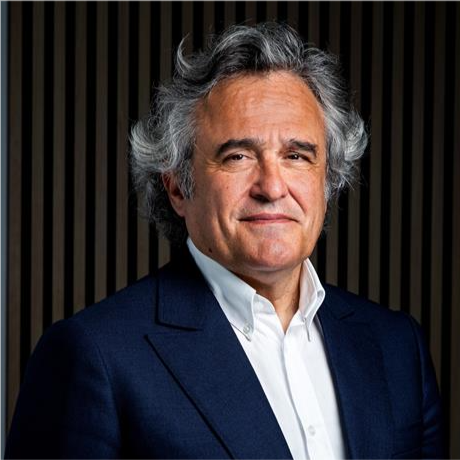
Logistics at the heart of Africa’s food security challengeToday’s geopolitical volatility is reshaping Africa’s food security landscape. From multimodal corridors to cold chain infrastructure and digitalisation, closing the logistics gap – first to last mile – is becoming as strategic as production itself. Philippe Labonne, President and CEO of Africa Global Logistics, makes the case for why investing in physical infrastructure, human capital and targeted job creation is essential to the continent’s food future.

-
(GMT+2)Conversation with
Housing Africa on its own termsHousing a continent is, at bottom, a sovereignty question. In this 15-minute exchange, Serge Ekué will address what it takes to build a functional housing market on African terms – local-currency long-term finance, domestic construction value chains, land systems that work – and why getting this right matters beyond the sector itself: for energy infrastructure, for industrial development, for the demographic dividend. What does it mean to house Africa on its own terms – and who has to do what to get there?
-
(GMT+2)Panel
Disrupters' Club - M&A Season: Can consolidation create the continent’s next tech champions?Africa’s tech sector hit a definitive inflection point in 2025: M&A deals surged 72% to a record 67 transactions. As venture capital tightened, strategic buyers pivoted toward consolidation. Moniepoint acquired two financial institutions for license expansion. Twiga Foods bought three distributors for supply chain control. Flutterwave’s Mono acquisition and Paystack’s Ladder Bank purchase signal a major shift toward integration as a scaling strategy. With 62.5% of Nigerian fintech firms planning regional expansion but facing 12+ month regulatory approval timelines, acquisition has become the fastest path to cross-border scale and license access. Can consolidation create durable pan-African champions, in the face of continental regulatory fragmentation?
Key points
- Regulatory acceleration: What concrete policy changes would unlock faster cross-border tech M&A – harmonized approvals, mutual license recognition, clearer competition thresholds?
- Time to buy: When should established players move from partnerships to acquisition? What signals indicate a target is integration-ready versus a distraction?
- AfCFTA Stars: Can start-ups leverage their entrepreneurial agility to set an example for transnational African integration?


-
(GMT+2)Panel
The $1 trillion bridge : Financing Africa’s real estate revolutionAfrica faces a 50-million-unit housing deficit and a $1 trillion financing gap. In cities like Nairobi, Abidjan, and Lagos, 75% of the population are tenants. While this reflects booming urbanisation and growth, driving Centum’s double-digit annual rental yields in Kenya, outperforming stocks and bonds, it is also the result of a broken system. Banks operate with high policy rates, weak land-title systems, and few formal developers, which makes long-tenor mortgages difficult. But solutions are emerging. The West African Development Bank (BOAD) is proposing mortgage-portfolio securitisation. Shelter Afrique and IFC are backing cost- and climate-conscious developers, while PropTechs like Jumba and Seso Global are digitising land records, materials procurement and rental management. The real challenge now is to turn these breakthroughs into a housing system that works at scale and attracts long-term investment.
Key points
- Insurable assets, bankable projects: what mechanisms could unlock long-tenor mortgage credit at scale?
- What are the economic obstacles for developers to embarking on smaller-scale, faster real estate projects? Can threshold be lowered to diversify and catalyse the industry?
- How can developers, DFIs and governments collaborate to ensure returns are secured while stable jobs are created?


 Speaker
Henrik E. PEDERSEN
Regional Industry Director, Manufacturing, Agribusiness and Services, Africa, IFC -
(GMT+2)Panel
Unyielding growth: Tackling Africa's agricultural midstream challengeAfrica’s fertiliser market is projected to exceed $80 billion by 2030, driven by upstream investment from OCP, Dangote and Indorama. Input use is rising in Nigeria and Kenya, and targeted programmes have lifted yields in some staples. Yet twenty years after the Abuja Declaration committed governments to 10% agricultural spending and 6% growth, most countries missed both targets. Even where inputs have driven productivity gains, weak midstream capacity prevents industrial translation. Africa still imports $70–100 billion of food annually because local output rarely meets industrial buyers’ volume, standard or reliability requirements. Regional breweries and bottlers struggle to source consistent local feedstock. The real frontier is forging scalable midstream industries – processing, storage, quality assurance – that stabilise supply, anchor value chains and build the agro-industrial champions Africa needs.
Key points
- Which midstream investments – milling, storage or packaging – would most effectively convert Africa’s growing input investments into industrial capacity?
- How can large processors and FMCG giants structure offtake systems that absorb local crops and de-risk expansion?
- Which regional standards, logistics corridors and financing structures can enable African firms to scale beyond national markets?


-
(GMT+2)Presidential Panel
The sovereign test: Can Africa turn continental alliances into assets?The case for pan-African shared ownership is seldom contested in principle. Entrenched habits, hard trade-offs over strategic autonomy, and competing national priorities have kept ambition ahead of outcomes. The costs are compounding, and the geopolitical context is unforgiving. As major powers double down on backing their own champions, Africa’s capacity to do the same at continental scale becomes a strategic question of the first order. Joint ventures built around shared strategic interests, cross-border public investment, corporates sharing equity and operations – giving public and private actors a genuine stake in each other’s success. African Presidents discuss what stands between such alliances and their realisation.
Key points
- Where does the case for national control still hold – and where has it become a constraint on continental ambition?
- What commitment made in Kigali would signal that this conversation has moved beyond principle?
- What forms of shared ownership – across public investment, private equity and joint ventures – are African states prepared to advance, and on what timeline


-
(GMT+2)Ubuntu Tribe Private Cocktail
Trust, capital and growth: Shaping Africa’s next economic eraAccess by invitation only.
As Africa navigates a rapidly evolving global landscape, shaped by shifting capital flows, geopolitical realignments, and new growth frontiers, the continent stands at a pivotal moment. Beyond growth itself, the key questions are becoming more structural: how trust is built across markets, how capital is mobilized and deployed, and how leadership will shape the continent’s long-term trajectory. Ubuntu Tribe is convening a carefully selected group of senior decision-makers, investors, and institutional leaders for a high-level exchange. Rather than a traditional networking moment, this session aims to foster meaningful dialogue, shared perspectives, and high-value connections among those actively shaping Africa’s economic future.
-
(GMT+2)COCKTAIL
50 Years Airbus Flying in AfricaAccess by invitation only.
The Airbus 50th Anniversary Cocktail Reception, hosted in partnership with Jeune Afrique, celebrates five decades of Airbus Commercial Aircraft flying in Africa, connecting continent’s people, economies and cultures. Held alongside the Africa CEO Forum in Kigali, the event marks a significant milestone, honoring the enduring partnerships and shared achievements that have shaped Airbus’ presence across the region. It offers a premier space for reflection on five decades of collaboration and a forward-looking tribute to the continued growth of the African Aviation industry.

🎥 ACF TV